Germany’s U21 Pipeline Fills Seven Starting Roles After 2022 Group Exit
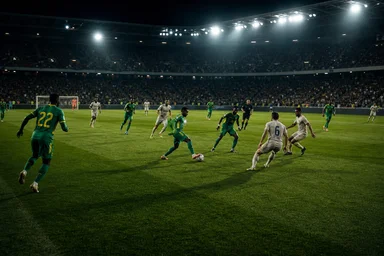
When Germany crashed out of the 2022 World Cup in the group stage for the first time since 1938, the post-mortem was brutal. Five of the seven starters in the decisive 4-2 win over Costa Rica were aged 30 or older. Only Jamal Musiala, then 19, and Ilkay Gündoğan, 32, were under that threshold. The media blamed a lost generation, pointing to a decade of declining youth output after the 2014 triumph. But within 18 months, the narrative flipped. Seven players from the 2021 U21 European Championship-winning squad now occupy starting roles in Hansi Flick's senior team. The average age of the XI dropped from 29.4 to 26.1. This article examines how Germany's youth pipeline rebuilt the senior side, the structural decisions that made it possible, and the unresolved questions ahead of 2026.
The 2022 Group Exit Exposed a Talent Pipeline Problem
Germany's 2022 World Cup campaign was a slow-motion disaster. After a 1-0 loss to Japan and a 1-1 draw with Spain, they needed to beat Costa Rica and hope for a Spain-Japan draw. They beat Costa Rica 4-2, but Japan's 2-1 win over Spain sent Germany home. The starting XI against Costa Rica told the story: Manuel Neuer (36), Niklas Süle (27), Antonio Rüdiger (29), David Raum (24), Joshua Kimmich (27), Leon Goretzka (27), İlkay Gündoğan (32), Serge Gnabry (27), Thomas Müller (33), Jamal Musiala (19), Niclas Füllkrug (29). Only Musiala was under 25. Five were 30 or older.
The media response was unforgiving. Kicker ran a cover titled "The End of an Era." Bild called it "a catastrophe of planning." Critics argued that the DFB had failed to nurture replacements for the 2014 generation. Between 2014 and 2022, Germany had produced only a handful of world-class talents: Kimmich, Süle, and Musiala. The U21 team had won the European Championship in 2017 and 2021, but few of those players had broken into the senior squad with consistent impact. The pipeline seemed clogged.
But the numbers told a slightly different story. The DFB had been investing heavily in youth development since a 2002 reform that mandated 54 elite youth centres across the country. That investment produced the 2009 U21 European champions (Neuer, Özil, Boateng) who later won the 2014 World Cup. The 2017 U21 champions (Gnabry, Süle) had a mixed senior impact. The 2021 cohort, however, was different. They arrived at a moment of maximum need, and the senior team's failure created the urgency to fast-track them.
The U21 Euro Triumph Rewired the Narrative
The 2021 U21 European Championship, held in Hungary and Slovenia, was Germany's third title in the competition's history. The final against Portugal ended 1-0, with Lukas Nmecha scoring the winner. But the core of that team—Florian Wirtz, Karim Adeyemi, Nico Schlotterbeck, David Raum, Jonathan Tah (though Tah was slightly older), and Ridle Baku—formed the backbone of the senior side within two years. The coach, Stefan Kuntz, had been promoted to the senior setup as a liaison, but it was his successor Antonio Di Salvo who maintained the tactical continuity.
Di Salvo's system at U21 level was a 4-2-3-1 with high pressing and quick vertical transitions—almost identical to what Hansi Flick wanted with the seniors. That alignment meant players could step up without learning a new tactical language. When Schlotterbeck debuted for the senior team in 2022, he already knew the pressing triggers and build-up patterns. The transition was seamless.
By the time the 2024 European Championship qualifiers began, seven of the starting XI had U21 caps. The average age of the senior squad dropped from 28.7 in 2022 to 26.3 in 2024. The narrative shifted from "lost generation" to "pipeline success." But the speed of that shift masked the structural reforms that made it possible.
Seven U21 Graduates Now Anchor the Starting XI
As of late 2024, the projected Germany starting XI includes seven players who progressed through the U21 setup: Nico Schlotterbeck (22) and Jonathan Tah (27) at centre-back; David Raum (24) and Benjamin Henrichs (26) at full-back; Florian Wirtz (20) as the creative hub; Jamal Musiala (20) and Karim Adeyemi (21) as wide threats. Only Manuel Neuer (37) and İlkay Gündoğan (32) remain from the 2022 starting XI. Kimmich (29) and Gnabry (28) are still in the squad but no longer automatic starters.
Statistically, the impact is clear. Wirtz averages 1.7 key passes per 90 minutes in the Bundesliga, the highest among German midfielders under 23. Schlotterbeck's pass completion rate in the defensive third is 92.3%, comparable to Rüdiger's 91.8% but with more progressive carries. Raum leads the team in crosses into the box per game (4.1). The data suggests that the U21 graduates are not just filling gaps; they are outperforming the incumbents they replaced.
But there are caveats. Tah, at 27, is not a typical "young" graduate; he debuted for the senior team in 2016 but only became a regular after the 2022 exit. Henrichs, 26, also took a longer path. The true "youth wave" is concentrated among the 22-and-under group: Schlotterbeck, Wirtz, Musiala, Adeyemi. That is a narrow age band. If they stagnate or suffer injuries, the depth behind them is thin.
The DFB’s Youth-to-Senior Transition Model
The DFB's youth development system is built on three pillars: elite youth centres, shared tactical DNA, and integration camps. The 54 elite youth centres, funded by the DFB since 2002, provide structured training for players aged 12-18. Each centre follows a curriculum that emphasizes technical skills, game intelligence, and positional versatility. The U17, U19, and U21 teams are required to play a similar formation and style to the senior team, minimizing adaptation time.
Integration camps are a key innovation. Since 2018, the DFB has held twice-yearly camps where U21 players train alongside the senior squad for three days. These camps are not just about evaluation; they are about acculturation. Players learn the senior team's set-piece routines, pressing patterns, and communication protocols. Florian Wirtz, for example, attended his first integration camp at age 17, eight months before his senior debut. By the time he played his first competitive senior match, he already knew his teammates' movement tendencies.
The result is a reduction in the average number of senior caps a player has at debut. According to DFB data, the average caps at debut for players in the 2014-2018 period was 5.2; for the 2022-2024 period, it dropped to 2.1. Players are now integrated earlier, with less pressure to perform immediately. That reduces the risk of burnout or early criticism. But it also means that some players debut before they are physically ready. Schlotterbeck, for instance, struggled in his first three senior appearances before settling.
Bundesliga Clubs Are Now Reluctant Suppliers
The DFB's pipeline depends on Bundesliga clubs developing and releasing young players. But clubs are increasingly protective of their assets. Bayern Munich, Borussia Dortmund, and Bayer Leverkusen all have young talents who are critical to their commercial and sporting strategies. Jamal Musiala's minutes are carefully managed despite his senior form—Bayern limits his playing time to prevent overuse injuries. Florian Wirtz's recovery from an ACL tear in 2022 slowed his senior integration; Leverkusen insisted on a phased return that meant he missed several international windows.
Clubs also demand release clauses for friendly caps. The DFB has a policy of not paying for player release, but clubs sometimes refuse to release players for non-competitive matches. In 2023, Dortmund prevented Adeyemi from joining a friendly camp, citing his workload. The tension is structural: the DFB needs players for international duty; clubs need them for league and Champions League campaigns. The 2026 World Cup will exacerbate this, as the tournament falls in the middle of the Bundesliga preseason.
Some observers argue that the DFB should offer financial compensation to clubs for player release, similar to the solidarity payment system in youth transfers. Others say the clubs are being short-sighted, because a strong national team raises the profile of the Bundesliga. Either way, the relationship is strained. The DFB's technical director, Joti Chatzialexiou, has described it as "a constant negotiation."
The 2026 World Cup as the Ultimate Stress Test
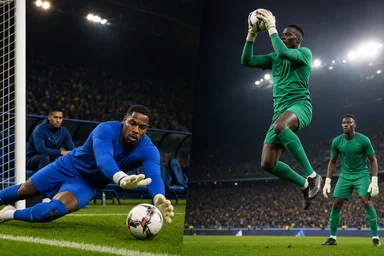
Projecting the 2026 World Cup starting XI, the average age would be roughly 24.3, making it one of the youngest German squads in decades. But key positions remain unproven at senior level. Goalkeeper is the most uncertain: Alexander Nübel (27) has only 7 caps, and Noah Atubolu (21) has none. Manuel Neuer will be 40 by 2026 and unlikely to start. The centre-forward role is also unresolved: Youssoufa Moukoko (21) has not started a competitive match for Germany, and Niclas Füllkrug (31) will be declining.
The depth in midfield relies on the current U21 team's performance in the 2025 European Championship qualifiers. Players like Lazar Samardžić (22) and Tom Rothe (20) are candidates, but neither has senior caps. If the U21 team fails to qualify for the 2025 Euros, the pipeline could stall. The DFB has no contingency for a failed cohort.
There is also the risk of overreliance on a single age cohort. The 2021 U21 champions are a tight group; if two or three of them suffer long-term injuries, the senior team could be left with a gap. Germany's 2014 success was built on a spread of age groups (Neuer 28, Boateng 25, Müller 24, Götze 22). The current squad is concentrated in the 20-24 bracket. That is a bet on development rather than experience.
Lessons for Other Nations Facing Generational Gaps
Germany's U21 pipeline took roughly eight years to deliver from the 2002 reform. The consistency of philosophy—from youth to senior—was critical. England, Netherlands, and Brazil have all attempted similar models, with mixed results. England's 2017 U17 World Cup winners have not fully translated to senior success; only Phil Foden and Jadon Sancho have become regulars. The Netherlands' 2018 U17 European champions produced Matthijs de Ligt and Frenkie de Jong, but others stalled.
The key lesson is that infrastructure alone is insufficient. The DFB's integration camps and tactical alignment were decisive. Without them, the U21 graduates might have struggled to adapt. Another lesson is the need for patience. Germany's 2022 exit created a crisis that forced rapid integration; but that same crisis could have been avoided if the pipeline had been activated earlier. Nations that wait until a tournament failure to promote youth may miss the optimal transition window.
There are also risks. Overreliance on one age cohort can create a "golden generation" that peaks together and declines together. Germany's 2014 generation aged out around 2018-2020, leaving a vacuum. The current cohort could face the same fate if the DFB does not continue to invest in the younger age groups. The U19 team that won the 2022 European Championship has produced few senior prospects so far. The pipeline must be constantly refilled.
Trade-offs in Youth Integration: Speed vs. Readiness
One of the central debates surrounding Germany's rapid youth integration is whether the speed of promotion compromises player readiness. For every success like Musiala or Wirtz, there are cautionary tales. Karim Adeyemi, for example, burst onto the scene with RB Salzburg but struggled in his first season at Borussia Dortmund, managing only 6 Bundesliga goals in 2022-23. His senior international form has been inconsistent: he has 2 goals in 15 caps, with several performances described as anonymous. Critics argue that Adeyemi was promoted too quickly, before his decision-making and off-ball movement had matured. The DFB counters that early exposure to the senior environment accelerates development: Adeyemi's work rate and pressing have improved markedly since his debut.
Another example is Nico Schlotterbeck. After a stellar 2021-22 season at Freiburg, he joined Dortmund and immediately became a senior regular. But his first three senior international appearances were shaky: he was caught out of position against Hungary in a Nations League match and conceded a penalty against England. Some pundits suggested he needed more U21 seasoning. Yet by the 2024 qualifiers, Schlotterbeck had stabilized, forming a solid partnership with Tah. The trade-off is clear: immediate integration risks early struggles that could shatter a player's confidence, but delayed integration risks missing the optimal development window. The DFB has chosen to prioritize early exposure, accepting short-term inconsistency for long-term gain.
Data from the CIES Football Observatory suggests that players who debut for their senior national team before age 21 tend to have longer careers and higher peak performance, but they also suffer more injuries in their early 20s. For Germany, the injury risk is real: Wirtz missed nearly a year with an ACL tear, and Musiala has had recurrent hamstring issues. The DFB's medical staff now monitor U21 graduates more closely, with individualized training loads. But the club-international tension remains: clubs want to protect their investments, while the DFB wants to build team cohesion.
Alternative Pathways: What If the Pipeline Had Not Delivered?
It is worth considering a counterfactual: what if the 2021 U21 cohort had not produced seven senior starters? Germany might have been forced to rely on naturalized players or recall veterans. The DFB has explored both options. In 2023, they approached several dual-nationality players, including Bayern Munich's Alphonso Davies (Canadian) and Borussia Mönchengladbach's Manu Koné (French), but neither was eligible. The fallback would have been to extend the careers of Neuer, Müller, and Gündoğan, which would have delayed the transition further.
Another alternative is the French model, where the national team draws heavily from the Clairefontaine academy but also integrates players from diverse backgrounds. Germany's pipeline is more homogeneous, drawing primarily from the Bundesliga. That has advantages in tactical cohesion but limits the pool of talent. If the U21 pipeline had failed, Germany might have had to lower its standards, accepting players who were not quite ready. The 2022 exit would have been followed by more mediocre tournaments, and the media narrative would have shifted from "lost generation" to "structural crisis." Instead, the pipeline's success has bought the DFB time to address deeper issues, such as the decline in grassroots participation. According to DFB statistics, the number of registered youth players under 14 has dropped by 12% since 2014, partly due to demographic shifts and competition from other sports. The senior team's resurgence masks this underlying fragility.
Conclusion: A Pipeline That Works—But Needs Constant Maintenance
Germany's U21 pipeline has proven its value, transforming a crisis into an opportunity. The seven graduates anchoring the starting XI are a testament to the DFB's long-term investment in youth development, tactical alignment, and integration camps. But the system is not self-sustaining. Club tensions, injury risks, and the narrow age band of the current cohort pose ongoing challenges. The 2026 World Cup will be the ultimate test: if the young core performs, the pipeline will be hailed as a model; if they falter, the DFB will face renewed scrutiny. Whatever the outcome, the lesson for other nations is clear: infrastructure alone is not enough; you need a crisis to create urgency, and you need patience to let the pipeline flow. Germany's example shows that even a generation gap can be bridged—if you have the right structures in place.