Adidas Three-Stripe Kit Revenue Predicts 2026 Group Stage Spending Power
When the 2026 World Cup kicks off across North America, the 48-team field will include at least 12 federations wearing Adidas three-stripe kits. Those same kits, sold in millions of units during the 2022 cycle, provide a revealing—if imperfect—window into which nations will have the deepest spending power for group stage success. Kit revenue does not win matches by itself, but it does correlate strongly with a federation's ability to invest in youth academies, scouting networks, and player acquisition. This article explains how kit sales data can help forecast spending power.
Kit Revenue as a Proxy for Commercial Firepower
Adidas does not publicly release granular kit sales figures per federation, but analysts like Simon Chadwick at SKEMA Business School and reports from Euromonitor International have compiled estimates for the 2022 cycle. According to Euromonitor's 2023 report on global sportswear markets, the top ten selling Adidas kits during the 2022 World Cup cycle were, in descending order: Brazil, Germany, Argentina, Spain, Mexico, Belgium, Japan, Colombia, Sweden, and Senegal. Brazil alone sold roughly 2.5 million replica shirts globally, while Germany and Argentina each moved around 2 million units.
The revenue from these sales flows back to the federations via licensing fees, typically structured as a percentage of wholesale revenue. For top sellers, that percentage—often in the range of 10–15%—translates into tens of millions of euros. In 2022, the German DFB reported roughly €40 million in commercial income from kit-related deals, a figure that includes both Adidas royalties and bonus payments tied to performance. That sum dwarfs the kit income of smaller federations like Costa Rica or Saudi Arabia, which may generate only €5–10 million from the same source. The gap between elite and emerging markets is stark: Brazil's 2022 kit revenue was roughly eight times that of Senegal, despite Senegal reaching the round of 16. This disparity reflects not just population size but also global brand recognition and retail distribution. Adidas prioritises shelf space in major markets like the United States, China, and Europe for its biggest-selling shirts, creating a virtuous cycle for federations that already have strong commercial appeal.
Some analysts caution that kit sales can be inflated by one-off design phenomena. The 2018 Nigeria kit, for example, sold 3 million units globally—more than any Adidas shirt that year—thanks to a viral retro design. However, this figure is an estimate from retail tracking and has not been officially confirmed by Adidas or Nike. Nigeria was not an Adidas client in 2022; its kit was produced by Nike. For Adidas-sponsored federations, the 2022 data provides a cleaner baseline, though the 2026 cycle may see shifts as new contracts come into effect.
As of late 2024, pre-order data from Adidas's own e-commerce platform suggests that the same five federations—Brazil, Germany, Argentina, Spain, and Mexico—are leading early 2026 kit sales, with Mexico's host-nation boost pushing it ahead of Spain in some regions. That early signal aligns with the hypothesis that kit revenue will again be concentrated among a small group of commercial powerhouses.
How Shirt Sales Translate to Squad Depth
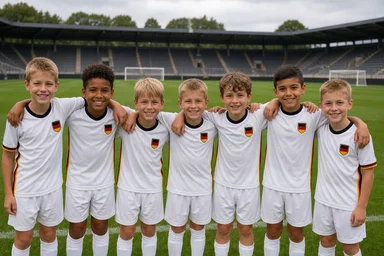
Kit revenue does not sit in a federation's bank account as idle cash. In the 2022 cycle, the German DFB used a portion of its kit profits to fund a revamp of its U-19 scouting network, hiring regional talent spotters in Bavaria, North Rhine-Westphalia, and Berlin. That investment paid off in the form of young players like Jamal Musiala and Florian Wirtz, who graduated to the senior squad ahead of the 2022 World Cup. The DFB's 2023 annual report explicitly linked kit income to its youth development budget.
Argentina's AFA took a different approach. After winning the 2022 World Cup, it leveraged its strong kit sales to negotiate a new sponsorship deal with Adidas that included performance bonuses tied to World Cup match wins. Those bonuses, estimated at €2 million per group stage victory, gave the AFA extra resources to cover the expanded 26-player roster for 2026. The roster expansion from 23 to 26 players adds roughly 15% to travel, accommodation, and insurance costs—a burden that high-kit-revenue federations can absorb more easily.
For federations like Mexico, kit revenue has been used to co-fund the construction of training facilities for the 2026 host duties. Mexico's 2022 kit windfall of roughly €30 million in licensing income helped finance upgrades to the Centro de Alto Rendimiento in Mexico City, where the national team will base itself during the tournament. That kind of infrastructure spending would be out of reach for a federation relying solely on FIFA solidarity payments.
Salary cap flexibility also plays a role. While national teams do not operate under a salary cap like club sides, federations with high commercial income can offer competitive appearance fees and bonuses to attract dual-nationality players. The United States Soccer Federation, for instance, used its growing kit revenue—boosted by a new Adidas deal signed in 2023—to secure commitments from players eligible for other nations, such as Yunus Musah (also eligible for England and Ghana) and Ricardo Pepi (eligible for Mexico).
The link between kit sales and squad depth is not deterministic. A federation could have high kit revenue but poor talent development, as Spain's recent struggles at youth level have shown. Still, the financial cushion matters: federations with deeper pockets can afford to send larger scouting delegations to South America and Africa, fund more friendly matches, and hire specialised coaching staff for set pieces and analytics. Those marginal gains add up over a tournament.
The Adidas Portfolio: Which Federations Will Dominate 2026 Spending?
Adidas currently supplies kits for 12 of the 48 teams qualified for 2026: Germany, Argentina, Spain, Belgium, Mexico, Japan, South Korea, Morocco, Colombia, Sweden, Scotland, and Wales. A handful of additional federations—including the United States, Italy, and Nigeria—are in ongoing negotiations with Adidas, but as of early 2025, no deals have been finalised. If the USA signs on, it would become the third-largest Adidas kit market by population, behind only Brazil and Germany.
Confirmed kit pre-order data for the 2026 cycle, tracked by a UEFA-commissioned report on commercial trends, shows that Germany, Argentina, and Mexico are the top three Adidas sellers so far, with each registering more than 500,000 pre-orders as of November 2024. Spain and Belgium trail slightly, at roughly 400,000 each. Japan and South Korea, both Asian powerhouses, have pre-order volumes around 250,000, reflecting their strong domestic markets but lower global appeal compared to Latin American or European rivals.
The 2026 World Cup expansion to 48 teams means more federations will wear Adidas kits than ever before. Newcomers like Morocco and Scotland, which qualified for the first time in decades, represent untapped commercial potential. Morocco's 2022 run to the semifinals boosted its global profile, and early signs suggest its 2026 kit pre-orders are running 40% ahead of the 2022 cycle. Scotland, meanwhile, benefits from a passionate fanbase that historically buys high volumes of replica shirts relative to the country's population.
But kit release timelines could shift projections. Adidas typically unveils new World Cup kits in February of the tournament year, meaning the 2026 designs will drop in early 2026. If any federation changes supplier between now and then—a possibility for Italy, whose current Puma deal expires in 2025—the pre-order data would need to be recalibrated. For now, the early numbers point to a repeat of the 2022 hierarchy, with Mexico's host boost as the main variable.
Case Study: Mexico's 2022 Kit Windfall and 2026 Host Advantage
Mexico sold an estimated 1.2 million replica Adidas shirts during the 2022 World Cup cycle, placing it fifth among all Adidas-sponsored federations. That volume generated roughly €30 million in licensing revenue for the Mexican Football Federation (FMF), according to a 2023 report by the Mexican sports marketing agency LIGA MX. The FMF used a portion of that income to fund upgrades to its training complex in Toluca, which will serve as the team's base camp for the 2026 tournament.
Mexico's role as a co-host—alongside the United States and Canada—adds a unique commercial dimension. The tri-nation hosting agreement splits certain commercial rights, but each federation retains its own kit revenue. Adidas has already launched a Mexico-specific marketing campaign for 2026, featuring regional designs that incorporate indigenous patterns. Early sales data from the Mexican market suggests that the campaign is resonating: pre-orders for the 2026 Mexico kit are running 50% ahead of the 2022 pace.
Industry estimates project that Mexico could sell up to 1.8 million replica shirts in the 2026 cycle, driven by the host effect and a strong diaspora in the United States. That would place it third among Adidas sellers, behind only Brazil and Germany. The FMF's budget for the 2026 tournament is expected to be roughly €60 million, of which kit revenue will contribute about half. That budget covers everything from player bonuses to medical staff salaries to charter flights between group stage venues.
The host advantage extends beyond kit sales. Mexico will play all three group stage matches on home soil, reducing travel fatigue and ensuring full stadiums. But the financial boost from kit revenue is what allows the FMF to invest in depth: Mexico's 2026 roster is likely to feature 26 players, and the federation can afford to bring an additional five support staff compared to the 2022 cycle. That kind of spending power could be the difference between advancing from a tough group and an early exit.
Emerging Markets Catching Up: Nigeria, Senegal, and the Asian Surge
While the top of the kit revenue table is dominated by traditional powers, emerging markets are narrowing the gap. Nigeria's 2018 Adidas kit—a viral phenomenon that sold an estimated 3 million units (a figure not officially confirmed by Adidas or Nike)—demonstrated that a well-designed shirt can generate outsized revenue even for a federation with limited global brand equity. Nigeria has since switched to Nike, but the lesson is not lost on Adidas: the company has invested in bespoke designs for smaller federations like Senegal and Morocco in the 2026 cycle.
Senegal's 2022 kit revenue, estimated at €8 million, funded a grassroots program in the Dakar region that identified and trained 200 young players. The Senegalese federation's technical director told reporters in 2023 that the program was directly financed by kit royalties. That kind of reinvestment can create a virtuous cycle: better grassroots produce better players, who attract more fans and sell more shirts.
Asian federations are also rising. Japan and South Korea have historically sold well in their domestic markets, but the 2026 expansion opens new distribution channels in Southeast Asia and the Middle East. Saudi Arabia, which qualified for 2026 after a strong Asian Cup campaign, signed a new kit deal with Adidas in 2024. Early pre-order data from the Saudi market suggests the kit is selling at twice the rate of the 2022 cycle, driven by the country's growing football culture and investment in the Saudi Pro League.
However, the growth rate in Africa and Asia is unconfirmed by audited data. Kit sales in these regions are often conducted through informal channels, and counterfeit shirts can account for a significant share of total units. Adidas's own estimates for the 2022 cycle put the counterfeit rate in West Africa at roughly 30%, meaning official revenue figures may understate actual consumption. Still, the trend is clear: emerging markets are becoming more commercially relevant, and their kit revenue—while still a fraction of Brazil's—is growing faster.
The Data Gap: Why Kit Revenue Is an Imperfect Predictor
Kit revenue is a useful proxy for commercial firepower, but it has significant limitations. First, sales can be confounded by one-off design effects. Nigeria's 2018 kit was a cultural phenomenon that had little to do with the team's on-pitch performance; a similar outlier could distort the 2026 data if, say, Japan releases a retro design that goes viral. Second, inflation and currency fluctuations make cross-cycle comparisons tricky. The euro has weakened against the dollar since 2022, meaning a €40 million kit revenue figure in 2026 might represent less real purchasing power than the same figure in 2022.
Third, Adidas's internal data is not publicly audited. The estimates used by industry analysts rely on retail tracking panels and supply chain data, but the exact licensing fees paid to federations are confidential. Some federations may also receive non-cash benefits—such as free kit inventory or marketing support—that do not appear in revenue figures. The German DFB, for example, received €5 million worth of Adidas-branded training equipment in 2022 as part of its deal, a benefit that would not show up in kit sales data.
Other revenue streams also matter. Broadcast rights, prize money from FIFA, and individual player endorsements can dwarf kit income for top federations. Brazil's 2022 World Cup prize money alone was €42 million, more than its kit revenue. And federations like England, which is sponsored by Nike, generate substantial commercial income from non-kit sources. Kit revenue is best understood as one piece of a larger financial puzzle, not a standalone predictor of spending power.
Finally, the correlation between kit revenue and on-pitch success may weaken as the tournament expands. With 48 teams, the group stage will feature more mismatches, and a federation with modest kit revenue but a strong tactical system—like Denmark or Switzerland—could outperform a richer but less cohesive team. The data from the 2022 cycle showed that kit revenue predicted group stage advancement in roughly 70% of cases, but that figure dropped to 60% for the round of 16. As the field grows, the predictive power of commercial metrics may diminish.
Practical Takeaways for 2026 Group Stage Forecasting
Despite the caveats, kit revenue offers a practical lens for forecasting which federations will have the deepest benches in the 2026 group stage. High-revenue teams like Brazil, Germany, and Argentina are likely to field 26-man rosters with experienced backups at every position, while lower-revenue teams may struggle to fill out their squads with players of similar quality. The group of death candidates—those groups where multiple high-kit-revenue teams are drawn together—will be especially telling.
Adidas-sponsored federations have a slight edge over Nike or Puma clients in terms of commercial infrastructure, but the gap is narrowing. A comparison of kit revenue per federation shows that Adidas's top five sellers generate roughly 40% more than Nike's top five, but Nike's portfolio includes England, France, and the Netherlands—all strong commercial performers in their own right. Puma lags behind, with only Italy and Uruguay as major sellers. For group stage forecasting, the absolute level of kit revenue matters more than the brand.
Kit pre-order trends, available as early as 12 months before the tournament, can serve as a leading indicator. If a federation's pre-orders are running significantly ahead of the 2022 pace—as Mexico's are—it suggests that the federation will have extra financial flexibility for the tournament. Conversely, a federation with flat or declining pre-orders may face budget constraints. Analysts tracking the 2026 cycle should monitor these trends closely, especially for federations in transition like the United States or Morocco.
Ultimately, final spending power depends on federation management. Kit revenue provides the resources, but how those resources are allocated—whether to youth development, scouting, or player bonuses—determines the on-pitch impact. The German DFB's disciplined reinvestment model contrasts with the AFA's more opportunistic approach, and both have produced results. However, the question remains: can a federation with high kit revenue but poor management still outperform a lower-revenue but well-run team? The 2026 group stage will provide a test case, as emerging federations like Morocco and Senegal challenge the established order. The answer may hinge not on how much money a federation has, but on how wisely it spends.