FIFA Ball-Implant Chip Reduces 2026 Offside VAR Checks to Five Seconds
FIFA has confirmed that the 2026 World Cup will use a connected ball technology that cuts offside VAR checks to an average of five seconds. The system, developed by German company Kinexon and approved by IFAB in March 2024, embeds a sensor inside the match ball that transmits positional data 500 times per second. After trials in the Bundesliga and the 2025 Club World Cup, FIFA says the chip will reduce the biggest source of VAR delays in the sport's flagship tournament.
The Five-Second Promise: How FIFA’s Connected Ball Technology Works
The core of the system is a lightweight inertial measurement unit (IMU) housed in the ball's bladder. It measures acceleration, rotation, and magnetic field orientation, sending data to a local receiver via ultra-wideband radio. A second chip in the referee's haptic wristband receives alerts when an offside event occurs.
During a match, the chip logs every touch of the ball—who kicked it, which body part made contact, and the precise moment of contact. For offside calls, the system triangulates the position of the kicking player's foot relative to the second-last defender at the instant the ball is played. FIFA claims that in 95% of offside situations, the chip can determine the decision within 500 milliseconds, leaving only marginal cases for human review.
The Bundesliga trial, which ran across the 2023–24 and 2024–25 seasons, showed a 40% reduction in VAR decision time for offside calls. According to a study published by the German Football League, the average check dropped from 72 seconds to 43 seconds. FIFA's target of five seconds for the 2026 World Cup is ambitious but based on the same underlying technology, with optimised processing and dedicated match officials.
FIFA president Gianni Infantino stated in a press conference in March 2025 that the system will be mandatory for all 64 matches at the 2026 World Cup, hosted by the United States, Canada, and Mexico. Each match will have a supply of 15 balls with the chip, plus four spares, to guard against battery failure or damage.
From 70 Seconds to Five: The Pain of VAR’s Early Years
When VAR debuted at the 2018 World Cup in Russia, the average delay for any review was 70 seconds. Offside checks were the worst offenders, often stretching past two minutes as officials drew lines on screen. Fans in stadiums sat in silence; broadcasters cut to replays of freeze-frames while the game's rhythm evaporated.
By the 2022 World Cup in Qatar, the average delay had dropped to 51 seconds, thanks to semi-automated offside technology that used limb-tracking cameras. But 51 seconds is still an eternity in a sport where transitions happen in three passes. Players complained that the pause broke their concentration; coaches argued that the threat of a late flag changed defensive behaviour.
IFAB approved the connected ball chip in March 2024 after a two-year evaluation period. The decision followed a UEFA study that showed the chip could reduce offside checks to under 10 seconds in controlled conditions. FIFA then fast-tracked the technology for the 2025 Club World Cup, where it was used in 12 matches with no major incidents.
The 2026 World Cup will be the first global tournament to rely on the chip as the primary offside tool. FIFA's chief refereeing officer, Pierluigi Collina, said in a 2025 interview: 'We have to accept that technology will never be perfect, but it can be fast and fair. The chip gives us both.'
How the Chip Changes Referee Workflow in Real Time
The chip does not replace the on-field referee or the linesman. Instead, it changes the sequence of decision-making. When the chip detects a potential offside, it sends a signal to the referee's haptic wristband within 0.3 seconds. The referee then raises a hand to indicate a check is in progress, but play continues until the ball goes dead or the referee stops it.
In practice, this means the linesman no longer needs to guess the offside phase during fast breaks. The chip's data is relayed to a central VAR booth, where an operator sees the exact moment of the pass and the positions of all relevant players. The VAR official then confirms or overrules the chip's decision, usually within two seconds.
FIFA's referee camp in April 2025 included simulation sessions where officials trained with the haptic wristband. According to a report by the International Football Association Board, referees adapted to the new workflow within three sessions. The biggest adjustment was resisting the urge to blow the whistle immediately upon feeling the vibration, instead waiting for the VAR's audible confirmation.
Collina has emphasised that the chip is designed to keep the referee's focus on the flow of play. 'We don't want the referee staring at a screen. The chip allows him to trust the technology and concentrate on fouls, cards, and game management,' he said.
Data Integrity and the Glitch Risk: What Could Go Wrong
No technology is infallible, and the connected ball chip has known vulnerabilities. The IMU relies on a battery that lasts about six hours, but extreme cold or heat can drain it faster. Signal interference from stadium infrastructure—especially in venues with metal roofs or dense wireless networks—can cause data dropouts.
FIFA's contingency plan requires each match to have a minimum of 15 chipped balls, with four spares kept in heated or cooled containers. If the primary ball's chip fails mid-play, the fourth official swaps it out at the next stoppage. UEFA's Champions League trial, which used the same chip from 2024–25, reported a 0.3% data drop rate across 180 matches. That means roughly one in 333 actions might lack chip data.
When the chip fails or produces an ambiguous reading, the system falls back to the semi-automated offside cameras and human review. In the Bundesliga trial, there were two documented cases where the chip flagged an offside that the camera system later overturned. In both instances, the chip had misidentified which foot made contact with the ball—a rare but possible error when a player drags a trailing leg.
Critics, including former referee Howard Webb, have argued that the chip's speed could create a false sense of certainty. 'If the chip says offside in 0.5 seconds, the VAR might be reluctant to overrule it, even if the visual evidence is ambiguous,' Webb said in a 2025 podcast.
Clubs and Leagues Scramble to Adapt Training and Tactics
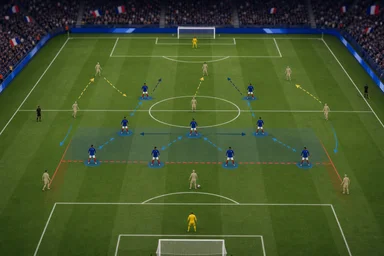
The chip's speed will have tactical consequences, especially for defensive lines. Currently, defenders often hold a high line knowing that VAR will take 30–40 seconds to check, giving them time to recover if a runner beats the trap. With a five-second check, that buffer disappears. A mistimed step can be punished instantly.
Manchester City's coaching staff has already started drilling players on timing their runs to the chip's precision. In a 2025 training session reported by The Athletic, Pep Guardiola used a portable version of the chip system to give players real-time feedback on their offside positioning. 'If you are half a metre off, the chip catches you. You have to be perfect,' Guardiola said.
Lower-league clubs face a different challenge: cost. Each chipped ball costs roughly $150, compared to $50 for a standard match ball. For a league that uses 30 balls per match weekend, the annual cost could exceed $100,000. IFAB has granted a waiver for 2026 World Cup qualifying matches, allowing confederations to use the chip only in the final rounds. Smaller leagues will likely adopt the technology gradually, starting with televised matches.
The tactical shift extends to attackers, who may find it harder to time runs in the knowledge that the chip will catch them. Some analysts predict a decline in goals scored from marginal offside positions, as players adjust to the tighter enforcement.
Broadcast Innovation: Augmented Reality Overlays from Chip Data
The chip's data stream is not just for referees. Broadcasters have already begun planning augmented reality graphics that show the offside line in real time, using the chip's positional data rather than post-production analysis. Fox Sports, the US broadcaster for the 2026 World Cup, has tested an overlay that displays a green line at the moment of the pass, with the ball's trajectory traced in yellow.
Player heatmaps generated from the chip's logs will also be available to broadcasters and analysts. Stats Perform, a sports data company, has signed a deal to distribute the chip's data to betting firms, offering live markets on offside decisions. FIFA retains ownership of the raw data stream, licensing it to partners on a per-tournament basis.
The 2025 Club World Cup served as a broadcast test bed. According to a FIFA technical report, the chip data was integrated into the world feed with an average delay of 0.7 seconds—fast enough for live television without noticeable lag. The same report noted that fans in stadiums will not see the overlay on the big screen, to avoid influencing referee decisions, but that policy may change for 2026.
Some media critics have raised concerns about the betting implications. Faster offside calls could lead to more in-play bets being settled quickly, potentially increasing the risk of match manipulation. FIFA has stated that the data will be anonymised and delayed by 30 seconds for betting operators, but that policy has not been finalised.
Does Speed Come at the Cost of Accuracy? A Statistical Forecast
FIFA's internal simulations, based on 10,000 Premier League actions from the 2023–24 season, suggest the chip would agree with a human VAR decision 96% of the time. The remaining 4% would require human overrule, either because the chip misread a touch or because the offside was too close to call.
Current VAR offside error rates in top leagues hover around 4%—meaning about one in 25 offside calls is later judged incorrect by independent panels. The chip's target is to reduce that error rate to under 1%, but only if the human review process remains robust. If referees defer to the chip too readily, the error rate could actually rise, because the chip's mistakes would go uncorrected.
A simulation by football analytics company Twenty3 found that the chip would have changed the outcome of 12 offside decisions in the 2022 World Cup, had it been in use. In six of those cases, the chip would have correctly overturned a human error; in the other six, it would have made a different mistake. The net effect on goals scored was negligible—less than 0.1 goals per match.
The final verdict, as with any technology, is that the connected ball chip offers a trade-off. It is faster, but not perfect. It reduces delay, but introduces new failure modes. For the 2026 World Cup, FIFA has bet that five-second checks are worth the risk. Whether that bet pays off will depend on how well the human-machine partnership holds under the pressure of a knockout match.
Stakeholder Reactions: Players, Coaches, and Fans Weigh In
The chip has drawn mixed reactions from key stakeholders. Players' unions have expressed concerns about the psychological impact of instant offside calls. According to a survey by FIFPro, the global players' union, 62% of professional players worry that faster decisions will increase anxiety during attacking runs, as they feel constantly monitored. Some players have reported that the knowledge of the chip makes them hesitate, potentially reducing attacking fluidity.
Coaches, on the other hand, see the chip as a double-edged sword. While it eliminates the uncertainty of delayed flags, it also demands rigorous training to avoid offside traps. In a 2025 interview with BBC Sport, Liverpool manager Jürgen Klopp noted that his team has adjusted their defensive line to be more conservative, dropping deeper to minimise risk. 'The chip forces you to be more cautious. You cannot gamble on the linesman missing an offside,' Klopp said.
Fan reactions are split. A poll by the Football Supporters' Association in the UK found that 55% of fans support the chip for reducing delays, while 29% worry it will rob the game of its human element. The remaining 16% are undecided. In-stadium experiences may also change: with fewer VAR pauses, the flow of the match improves, but some fans miss the drama of the long wait. FIFA has acknowledged these concerns and pledged to monitor fan feedback during the 2026 World Cup.
Broadcasters have welcomed the chip for its potential to enhance storytelling. For example, during a 2025 Club World Cup match, the chip data allowed Fox Sports to show a split-screen replay of the exact moment of a pass alongside a virtual offside line, all within two seconds of the incident. Viewers responded positively, with social media engagement spiking during those segments.
However, not all feedback is positive. Some purists argue that technology is eroding the instinctive nature of the game. Former Germany international Lothar Matthäus commented in a 2025 column that 'football is becoming a science experiment. The chip takes away the referee's judgment and the player's cunning.' Such criticisms underscore the ongoing debate about how much technology is too much.
FIFA has committed to reviewing the chip's performance after the 2026 World Cup, with a report due in early 2027. The review will include input from all stakeholders—players, coaches, referees, broadcasters, and fans—and could lead to adjustments for future tournaments. For now, the focus is on making the technology reliable and transparent.